Making an LPA when capacity or signing is uncertain
Making an LPA when capacity or signing is uncertain
51 min read
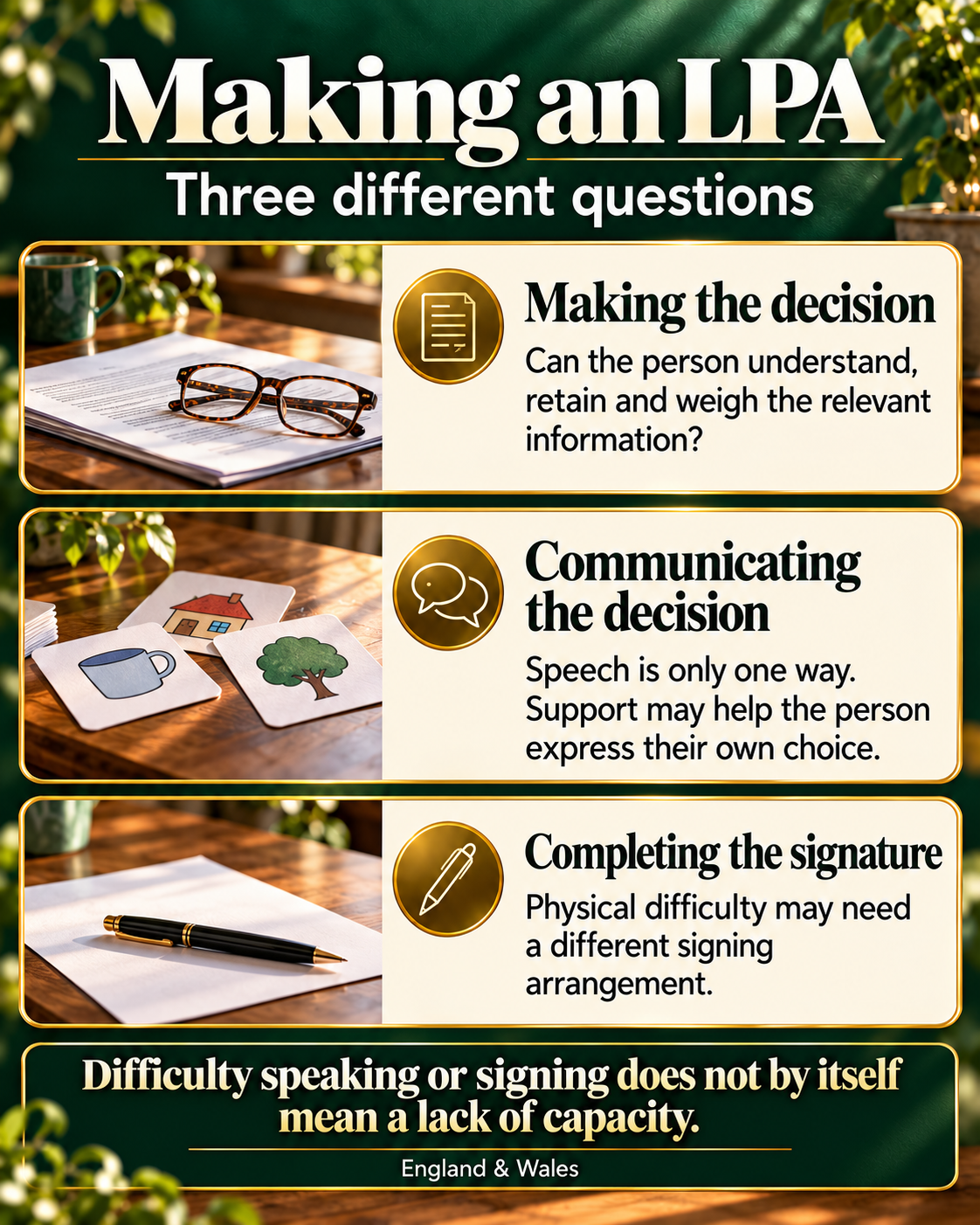
Last verified: October 2026 (England & Wales)After a stroke or a change in someone’s health, a family may wonder whether making a Lasting Power of Attorney (LPA) is still possible. Perhaps the person understands what they want but struggles to speak clearly or hold a pen.Difficulty speaking or signing does not, by itself, mean that someone lacks mental capacity. What matters is whether the person can make the particular LPA decision, with appropriate support, and communicate their own choice. The signing arrangements are a separate practical question.The person making the LPA is called the donor. This article explains what to consider before arranging an appointment, whether you are enquiring for yourself or helping someone else.
Start with the particular decisionMental capacity concerns a specific decision at a particular time. A diagnosis, age or disability alone does not settle whether someone can make an LPA. Equally, managing an everyday conversation does not prove that they understand the authority an LPA would give.The donor must be able to understand the relevant information, retain it long enough to decide, use or weigh it, and communicate their decision. All practicable steps to support them must be taken before concluding that they cannot do this. An unwise choice is not, by itself, evidence of a lack of capacity.For an LPA, the discussion includes what the document does, who the donor wants to appoint and the powers those people would receive. The answer must come from the donor, even when someone else has arranged the appointment.
When speaking is difficultSpeech is only one way of communicating. Depending on the person’s needs, a quieter setting, extra time, breaks, written information, pictures or communication aids may help. Where communication is complex, specialist support may be needed to establish the person’s own understanding and wishes. A relative or carer can explain what usually helps and provide useful background. They cannot supply the donor’s answers or make the LPA decision for them. There should also be an appropriate opportunity to explore the donor’s wishes without pressure from other people.
When a signature is difficultReduced movement, weakness or a tremor can affect signing even when someone understands the LPA fully. The rules allow alternatives to a conventional signature in appropriate circumstances, including a mark or another person signing at the donor’s direction. Each route has formal requirements.Tell me about the physical difficulty before arranging completion. I can explain the appropriate signing arrangements for the prepared paperwork. A relative should not simply sign the donor’s name or improvise a way of completing the forms.
What the certificate provider checksEvery LPA needs a certificate provider. This person must be eligible and satisfied that the donor understands the LPA, is acting freely, and that there is no fraud or other reason preventing its creation. Their role is more than witnessing a signature.My guide to the certificate provider’s role explains these safeguards and who can act.
How I can helpIf the donor cannot manage a phone conversation, a relative or carer can make the initial enquiry and explain the practical difficulties. That first conversation helps arrange suitable support. It does not replace my direct work with the donor when assessing capacity or acting as certificate provider.
Standard preparation and registrationWhere the standard service is suitable, I prepare the LPA, provide completion guidance, check the returned paperwork and submit and manage the registration application. You arrange your own eligible certificate provider, with guidance from me. This route does not include my enhanced assessment or my acting as certificate provider. Enhanced assessment and supportWhere closer consideration of capacity is appropriate, the enhanced service includes an assessment and written report. I can act as certificate provider where I am satisfied and eligible to do so. A home visit is by mutual agreement, with the assessment fee paid in full before the visit. A second return signing visit is not included.I am trained in the Mental Capacity Act 2005, undertake continuing professional development relating to capacity for Wills and powers of attorney, and hold a Level 2 qualification in dementia care. Where the circumstances require clinical or other specialist evidence, I will explain that before proceeding further. The Lasting Powers of Attorney service page sets out the current scope, payment stages and fees.
If an LPA cannot go aheadAn assessment is a way to establish the position, not a promise that an LPA can be made. If the donor lacks capacity to make it, nobody can make that LPA for them. Depending on the circumstances, it may be appropriate to reassess later or obtain specialist advice about another route, which could involve the Court of Protection. If the completed assessment shows that preparation should not proceed, the assessment fee is retained. Preparation fees paid for work that has not been carried out are refunded in line with the agreed service terms.
Does a dementia diagnosis automatically rule out an LPA?No. The question is whether the person can make the particular LPA decision at the relevant time. The diagnosis and its effects are relevant evidence, but the person’s abilities and the support available must be considered individually.
Should we wait until someone has recovered from an illness?There is no single waiting period that fits everyone. Recovery, fatigue and changes during the day can affect a useful appointment. Explain the situation at the initial enquiry so that timing and any need for specialist input can be considered. Urgency cannot replace the donor’s ability to make the decision.
Does a Will assessment automatically cover an LPA too?No. Making a Will and making an LPA involve different decisions and legal requirements. If both services are being arranged, the work can be coordinated, but each decision must be considered properly. The enhanced assessment charge is applied once to the agreed work, rather than automatically repeated for each document.
FeesFor current fees, please see Services & Fees. Arrange the right supportContact Fern Wills & LPAs and explain whether the concern is understanding, communication, signing or a combination of these. You do not have to decide which service is appropriate before getting in touch.This article provides general information for England and Wales. Advice about an individual LPA depends on the person’s circumstances.